
How AI Is Changing Skill Development in Bangladesh
– A Practical Guide
The AI Tides Reaching the Padma
Bangladesh stands at a pivotal moment. With a large, young, and increasingly digitally connected population, the nation's economic trajectory hinges on equipping its workforce with future-proof skills. Artificial Intelligence (AI) is no longer a distant concept; it is actively reshaping industries globally, and its impact on skill development in Bangladesh is profound and immediate.
This guide explores how AI is transforming learning and upskilling, and offers practical advice for professionals, educators, and policymakers to navigate this new era. We'll look at the current landscape, the skills in demand, and how to harness AI for a competitive edge.

Section 2: The AI Revolution in Learning
AI is fundamentally changing how we learn. Traditional, one-size-fits-all education is being replaced by personalized, AI-driven models.
Personalized Learning Paths
- Adaptive Learning Platforms: Algorithms analyze a student's performance in real-time, adjusting the difficulty of material and learning pace appropriately. This ensures that fast learners are challenged and struggling students get the specific help they need.
- Personalized Learning Paths: AI can create customized learning journeys based on individual strengths, weaknesses, and career aspirations.
- Intelligent Tutoring Systems (ITS): AI-powered tutors offer 24/7 assistance, providing explanations, answering questions, and offering feedback...

The shift to dynamic learning
The table below highlights the shift from traditional to AI-enhanced learning:
| Feature | Traditional Learning | AI-Enhanced Learning |
|---|---|---|
| Content Delivery | One-size-fits-all, standardized | Personalized, adaptive |
| Feedback & Assessment | Delayed, periodic testing | Real-time, continuous |
| Accessibility | Location-dependent, limited hours | 24/7 access, localized content |
Section 3: Essential AI-Driven Skills for the Bangladeshi Workforce
To thrive in an AI-integrated economy, workers must adapt. The focus is shifting from routine tasks to complex problem-solving and emotional intelligence.
3.1 TECHNICAL AND DATA SKILLS
- Data Literacy & Analysis: Understanding how data is collected, interpreted, and utilized to inform decisions.
- Prompt Engineering: The ability to craft effective queries to guide AI tools (like ChatGPT or Midjourney) to produce desired outputs.
- Basic Programming & Logic: While not everyone needs to be a software engineer, understanding basic coding principles (e.g., Python) helps in working with AI systems.
3.2 SOFT SKILLS (THE HUMAN ADVANTAGE)
- Complex Problem Solving & Critical Thinking: AI can process data, but humans must interpret nuances, navigate ambiguity, and make ethical decisions.
- Adaptability and Continuous Learning: The pace of technological change means the ability to quickly learn new tools and methods is paramount.
- Emotional Intelligence (EQ) & Empathy: In roles requiring human interaction, empathy, and relationship building, human touch remains irreplaceable.
Section 4: Industry-Specific AI Upskilling
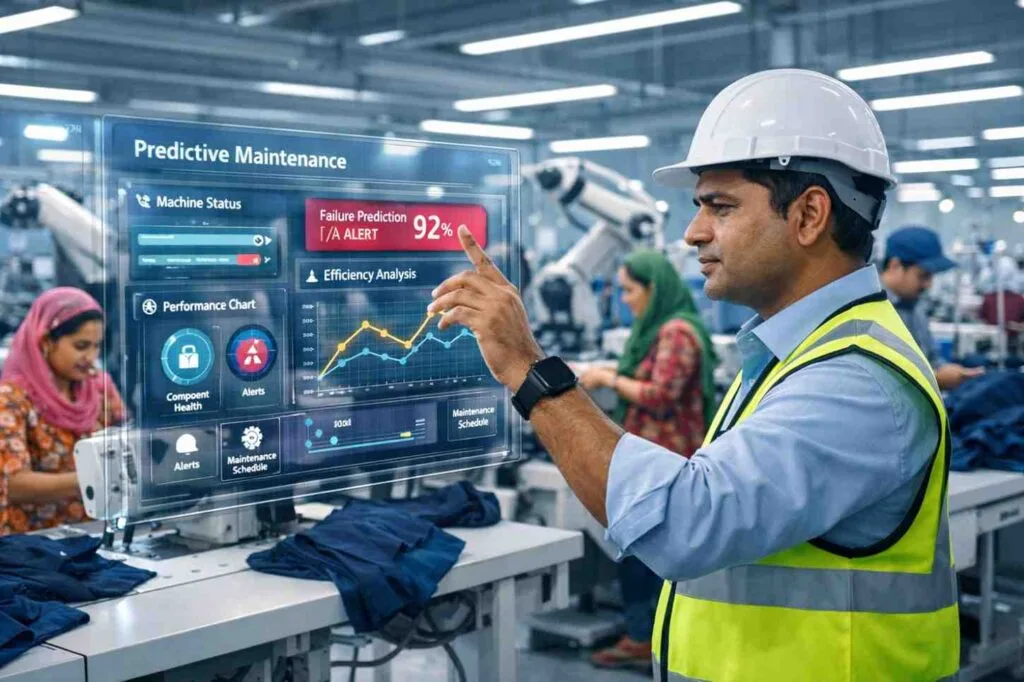
4.1 Ready-Made Garments (RMG) & Manufacturing
The RMG sector, the backbone of Bangladesh's economy, is ripe for AI integration.
| Role | AI-Driven Skill Needed | Value Proposition |
|---|---|---|
| Production Manager | Predictive Maintenance & Analytics | Anticipate machine failures before they happen, minimizing downtime. |
| Quality Control Inspector | Computer Vision & Defect Detection | Use AI tools to identify flaws in fabric more accurately than the human eye. |
| Supply Chain Analyst | Demand Forecasting AI Tools | Optimize inventory management and reduce waste through accurate predictions. |
4.2 Healthcare & Banking (Services)
- Healthcare: Doctors and nurses using AI diagnostic tools to analyze medical images or patient data more efficiently.
- Banking: Customer support agents transitioning to manage complex inquiries while AI chatbots handle routine tasks.
4.3 Agriculture and Agrotech
- Precision Agriculture: Farmers and agronomists learning to use AI-driven tools that analyze soil conditions, weather patterns, and crop health to optimize yields.
Section 5: A Practical Guide for Navigating the Shift
For Individuals (Learners)
- Embrace Lifelong Learning: Adopt a mindset of continuous learning. The skills you need today may evolve tomorrow.
- Utilize Online Resources: Platforms like Coursera, edX, and local initiatives offer accessible courses on AI, data science, and related fields.
- Start Small: You don't need a PhD in computer science. Begin by learning how to use productivity tools like ChatGPT or Copilot to enhance your daily work.

For Educational Institutions and Training Centers
- Integrate AI into the Curriculum: Move beyond traditional computing classes. Embed AI concepts and practical applications across various disciplines.
- Partner with Industry: Collaborate with tech companies to ensure training programs align with current and future market demands.
- Focus on Soft Skills: Elevate the importance of critical thinking, problem-solving, and communication alongside technical training.
For Policymakers and the Government
- Invest in Infrastructure: Ensure reliable internet access and affordable technology are available nationwide, bridging the digital divide.
- Develop a National AI Strategy: Create clear guidelines and frameworks for ethical AI adoption and workforce transition.
- Foster Public-Private Partnerships: Collaborate with the private sector to fund and facilitate large-scale upskilling initiatives.